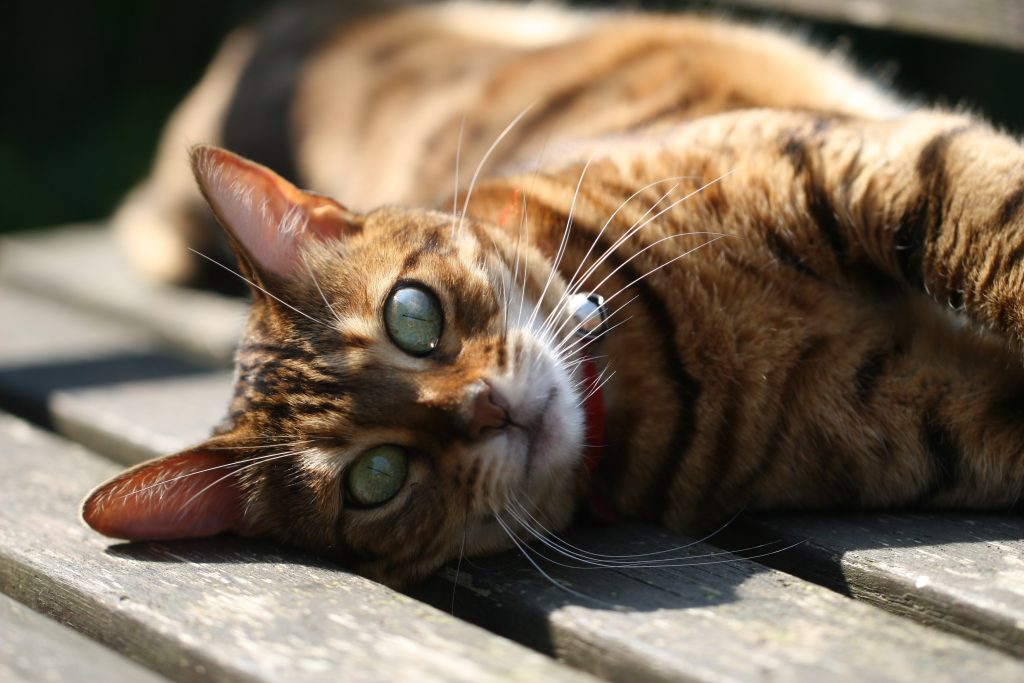
Two Bengal listings can look almost identical in photos and still carry very different price tags. Generation and testing move the price most; color moves it least.
A pet-quality SBT Bengal kitten (stud book tradition: four or more generations from the leopard cat) from a registered breeder usually lists at 1,500–3,000 in US prices. Petful and UrbanPetLovers both land in that range. Prices checked in October 2026. For a healthy pet, budget that and spend your first hour on the records. Tax and shipping come on top. The deposit comes off the total, so ask whether it’s refundable.
What shifts the figure, in order of impact:
- Generation: F1 Bengals run about $5,000 to $20,000 or more, and the price drops sharply with each generation. SBT is where the pet range above starts.
- Tier: Pet, show, or breeding rights (the right to breed the cat and register its litters). Show-quality kittens run 3,000–5,000, and breeding-quality kittens 4,000–10,000, with guides disagreeing on where that top tier starts.
- Breeder program: Health testing, registration, and the contract. A kitten under $1,000 usually means testing was skipped or the registration isn’t real.
- Color and markings: Silver, charcoal, and snow coats can add a premium, and crisp rosettes help.
Color moves the price less than most buyers expect.
Why Are Bengal Cats So Expensive?
Bengals cost more because a responsible program spends heavily before a kitten leaves: DNA tests, heart scans, registration, vet care. For an SBT kitten, wild ancestry isn’t in the price; it only prices in at F1–F3. Here’s where the money goes in a responsible program:
- DNA tests: UC Davis lists $47 for the Bengal PRA-b test (progressive retinal atrophy, an inherited blindness) and $71 for PRA-b plus PK-def (pyruvate kinase deficiency, a red-cell enzyme problem that causes anemia), as of October 2026. Those are the cheap tests.
- Heart scans: HCM (hypertrophic cardiomyopathy, a thickening of the heart muscle) has no reliable DNA test in Bengals, so breeders pay a veterinary cardiologist for an echocardiogram. Cost guides put that at about 500–900 per cat, and breeding cats are rescanned about once a year. A clear scan at one age doesn’t rule out HCM developing later.
- Everything else: Vet care, vaccines, and registry paperwork.
- Cats that don’t pay for themselves: Every breeding cat that’s retired or never produces still gets fed, vetted, and screened. That cost lands on the kittens that do sell.
A carrier parent isn’t automatically a red flag. Two carriers bred together produce 25% affected kittens, so what matters is that the pairing avoided it. A $3,000 Bengal with no echo report is a worse deal than a $2,200 Bengal with two dated ones. Generation is the other big driver, and it’s where listings get slippery.
Recommended Detailed Guide
F1 to F4 and SBT: What Generation Changes

The F-number counts generations from the leopard cat; it isn’t a quality grade. F1 has a leopard cat parent, F2 a leopard cat grandparent, F3 a great-grandparent. SBT (stud book tradition) means the leopard cat is at least four generations back. TICA writes the first three as F1, 2G, and 3G and registers them as Foundation cats, which can’t be shown. Listings say F1, F2, F3, so this guide does too.
F1s cost the most because they’re hard to make. Only the females breed, since early-generation males are usually sterile, and fertility generally returns around F4. A breeder also has to keep a leopard cat in the program. F1s list at about $5,000 to $20,000 or more, against 1,500–3,000 for SBT. Reputable breeders rarely advertise F2 and F3 prices, so call and ask.
A lower F-number doesn’t make a more authentic Bengal. It makes a cat with a wild parent or grandparent, and extra obligations. TICA’s standard aims for a domestic cat with a domestic temperament. No study compares early and later generations, but the AAFP discourages owning F1–F3 hybrids because they’re unpredictable, and says even later generations can be skittish or temperamental.
The practical reason local laws target early generations is rabies. No rabies vaccine is licensed for hybrid cats, and depending on local law, even a vaccinated hybrid that bites a person may be euthanized so its brain can be tested. Check your area’s rules before you compare F1 and F4 prices.
You can’t judge generation by looks; only a DNA-verified pedigree confirms an early-generation cat. Ask for a pedigree going back four generations. For a first Bengal, SBT is the sensible default.
Does Color Change a Bengal’s Price?

Usually a little, and less than generation or testing. TICA’s standard recognizes three color families: brown, silver, and snow. Snow Bengals (seal lynx point, mink, sepia) have ivory-to-tan coats and blue-to-aqua eyes, and silver Bengals have gray-to-nearly-white backgrounds. Charcoal isn’t a separate color; it’s a darker overlay on any base color. Blue and melanistic (solid black) aren’t in TICA’s list. A “blue Bengal” listing isn’t a TICA-standard color, so ask how the breeder tests and registers these cats.
TICA prefers two-tone rosettes in spotted cats (a rosette whose center is a different shade from its rim) but doesn’t require them. It gives glitter, the translucent shimmer on the hair, no preference either way, so any glitter premium is the breeder’s pricing, not the standard’s.
In the price lists I checked in October 2026, color premiums were inconsistent. Vengalicat prices brown, silver, and snow SBT kittens at $3,000 alike. Royal Bengal Cattery starts brown spotted at $2,700, seal lynx at $2,500, mink and silver at $3,000, and charcoal at $3,500. Guides that pool many breeders show higher ranges for rare colors, but a pooled range mixes color with generation and tier.
To judge a color premium, compare it with the same breeder’s price for a brown spotted kitten of the same tier and generation. Within a color, pattern moves the price more: Royal Bengal lists marbled kittens 600–1,000 below spotted ones, and breeders also cite marking contrast and rosette clarity. If the listing leads with the color and buries the test results, ask for the parents’ PRA-b, PK-def, and echo reports first.
You Might Also Like
All Types of Bengal Cats: Guide to Colors, Patterns & Genetics
Pet, Breeding or Show Quality: Which Tier Do You Need?
For almost every first-time home, pet quality is the right tier. The parents get the same health testing, the savings go to vet care and insurance, and an intact cat adds heat cycles in females and urine spraying in males. That’s why pet kittens sell with spay/neuter terms, and some breeders, like Purfect Pride, hold the registration papers until you send proof of surgery.
Breeding rights only make sense with a plan, a registered cattery, and the means to care for a queen (a breeding female) through pregnancy and kittening. Show quality means a kitten close enough to TICA’s standard to compete. Only SBT cats are eligible, and breeders usually sell these as show or breeding prospects, not pets.
Compare what’s included, not the headline price, and ask whether the breeder ships at all, and how. Read the guarantee clause yourself, and have your vet look over the parents’ health records. A good guarantee does four things:
- Names what’s covered. HCM, PRA-b, and PK-def are listed, not just “congenital defects.”
- Runs long enough. Terms vary widely: Ladd Hill gives two years for genetic disease, and Sakura gives five years for congenital defects and HCM.
- States the remedy. Refund, replacement, or a vet-cost cap. Push back if you must return a sick kitten before a replacement is issued, or if the replacement lapses when the breeder stops breeding.
- Gives you time for a vet check. Three days is common, so book the appointment before pickup.
Too Good to Be True? Cheap Bengal Kitten Red Flags
A price well under the bottom of the range above deserves one question: what was skipped? Usually it’s the testing, the contract, or the kitten itself. A rehomed adult is the honest exception; it lists low and says so.
To judge a breeder, look at three things: records, a written contract, and the parents, in person or on video. Email- or text-only contact, pressure to act fast, and a “free” kitten with shipping fees are scam signs on any cat. For a Bengal, put these five questions on the first call:
- “Can I see both parents’ health results?” A good answer is dated echocardiogram reports from a cardiologist, plus PRA-b and PK-def results. Walk away from “HCM-free lines,” a vet who “listened to her heart,” or results with no date.
- “Can I video-call and see the parents?” A good answer is a live call or a visit. Photos only, or excuses, can mean the kitten doesn’t exist.
- “How old will the kitten be at pickup, and when was each shot given?” TICA’s pet-buyer brochure says responsible breeders place kittens at 14 weeks or older, and the UK’s GCCF recommends 13, with the vaccine series finished a week earlier. A kitten sent home at 8 weeks is still mid-series on vaccines and still learning from its littermates, so ask for dated vet records.
- “How does payment work?” A good answer is a deposit with a receipt and the balance at pickup. Walk away from full payment before you choose, wire transfers, or gift cards.
- “Can you send the contract and your TICA cattery name before I pay?” Both should arrive without fuss, and you can check the name on TICA’s site, which TICA says is the only place to find breeders who signed its Code of Ethics. Reluctance to answer, or references you can’t verify, is your answer.
You Might Also Like
Why Are Bengal Cats Illegal? The 4 Layers of Law That Actually Decide
First-Year Cost vs. Yearly Cost
Think of the yearly cost in two parts. The kitten price is a small slice of a 12–16-year commitment (TICA gives up to 20, but 12–16 is what most guides say and what to budget on).
The predictable baseline for one adult cat in the US, prices checked October 2026:
| Yearly cost | Range |
| Food | 300–600 |
| Litter | 150–300 |
| Wellness visit and parasite prevention | 210–450 |
| Insurance | 300–700 |
| Total | 960–2,050 |
The national cat average for insurance is about $435 a year (NAPHIA, 2026), so the low end of that range is for a younger cat on a basic plan. Year one adds the kitten vaccine series (150–300), spay/neuter (100–350), a microchip (25–60), and gear such as a carrier, scratching posts, and perches (200–500). That’s about 475–1,210 on top, minus whatever your breeder includes. A cat wheel adds about $195, and a catio kit runs 300–1,500.
As with any cat, a neutered Bengal needs fewer calories, so measure portions and weigh your cat monthly. A common starting point for a neutered adult is about 1.2 × resting energy (RER = 70 × weight in kg^0.75), which works out to roughly 280 kcal a day for a 5 kg (11 lb) Bengal. Adjust it to body condition.
The swing cost is HCM. Daily medication runs about 30–100 a month, cardiology rechecks about 500–1,000 each, and an emergency for heart failure or a blood clot is 1,500–5,000 or more. Before comparing insurance, ask:
- Are hereditary conditions covered?
- Is there a waiting period?
- What counts as pre-existing? A murmur noted at a vet visit may count.
- What’s the annual limit and the reimbursement rate?
The terms matter more than the premium. Ask your vet when to schedule a baseline heart check and whether to see a cardiologist.
Paying Less Without Cutting Corners
Beyond choosing the pet tier, there are three safe ways to pay less:
- A retired breeder. Adults list at about 250–1,200 (Bengal Chateau, Wild N Sweet), often already spayed or neutered and vaccinated. It’s a purchase, not a rescue, so ask for the same health records you’d want for a kitten. Also ask how the cat handles strangers, kids, dogs, and household noise, since a cat raised in a breeding setup may be less used to household life, and ask for a trial period.
- A Bengal rescue. Bengal Rescue, Great Lakes Bengal Rescue, and the Bengal Rescue Network place Bengals, and fees vary with the vet care each cat needed first.
- Brown over snow or silver, if the breeder charges extra for the color.
A second-kitten discount saves a slice of the price once and adds a second cat’s food, litter, vet care, and insurance every year. Decide on the cat’s welfare first and the price second. Bengals often do well with a companion, and a lone Bengal leans hard on its people. The false savings are the red flags above, plus sight-unseen purchases with no video of the kitten or the parents.
You Might Also Like
Which Bengal Path Is Right for You?
Pick by your situation, not the price:
- First Bengal, indoor home: a pet-quality SBT from a tested program.
- Want to save and can handle a grown cat: a retired adult, with a trial period.
- Considering an F1–F3: only after you’ve cleared your local law in writing and read the AAFP’s cautions.
A listing price is one line in a 12–16 year commitment (TICA says up to 20). Plan for one big vet bill, whether through savings or insurance, and read the insurance terms, not just the premium.
Before you send a deposit, check:
- The parents’ health records: a dated echo, plus PRA-b and PK-def results
- Your local law, answered in writing
- The contract and guarantee, read in full
- The pickup plan: the kitten’s age, shot dates, and how it will travel
- A vet check booked for the first three days

Founder of Cats Question and lead cat care writer, with a background in veterinary education in Bangladesh and a lifelong passion for cats. Dedicated to creating trusted, practical content that helps cat owners make better everyday decisions—guided by real-life experience and inspired by a deep commitment to feline health and wellbeing.