A Tortie Maine Coon is a Maine Coon with a tortoiseshell coat pattern created by blended black and red/orange pigments. While the definition sounds simple, tortie coloring can still confuse many cat lovers researching kittens, coat genetics, or rare Maine Coon colors.
One tortie may have bold orange patches, while another appears mostly dark with subtle rust highlights. Because no two tortie Maine Coons look exactly alike, people often confuse tortie coats with calico or torbie patterns.
This guide will help you identify tortie coats more accurately, understand how kitten colors can change with age, and spot common breeder-listing misunderstandings before choosing a cat.
Tortie Maine Coon Colors and Pattern Variations

Tortie Maine Coons can look dramatically different from one another, even within the same color category. Some have bold, sharply separated patches, while others show softer blending that only becomes noticeable in certain lighting. Long fur can also make tortie patterns appear smoky, marbled, or layered depending on the season and coat length.
Black Tortie
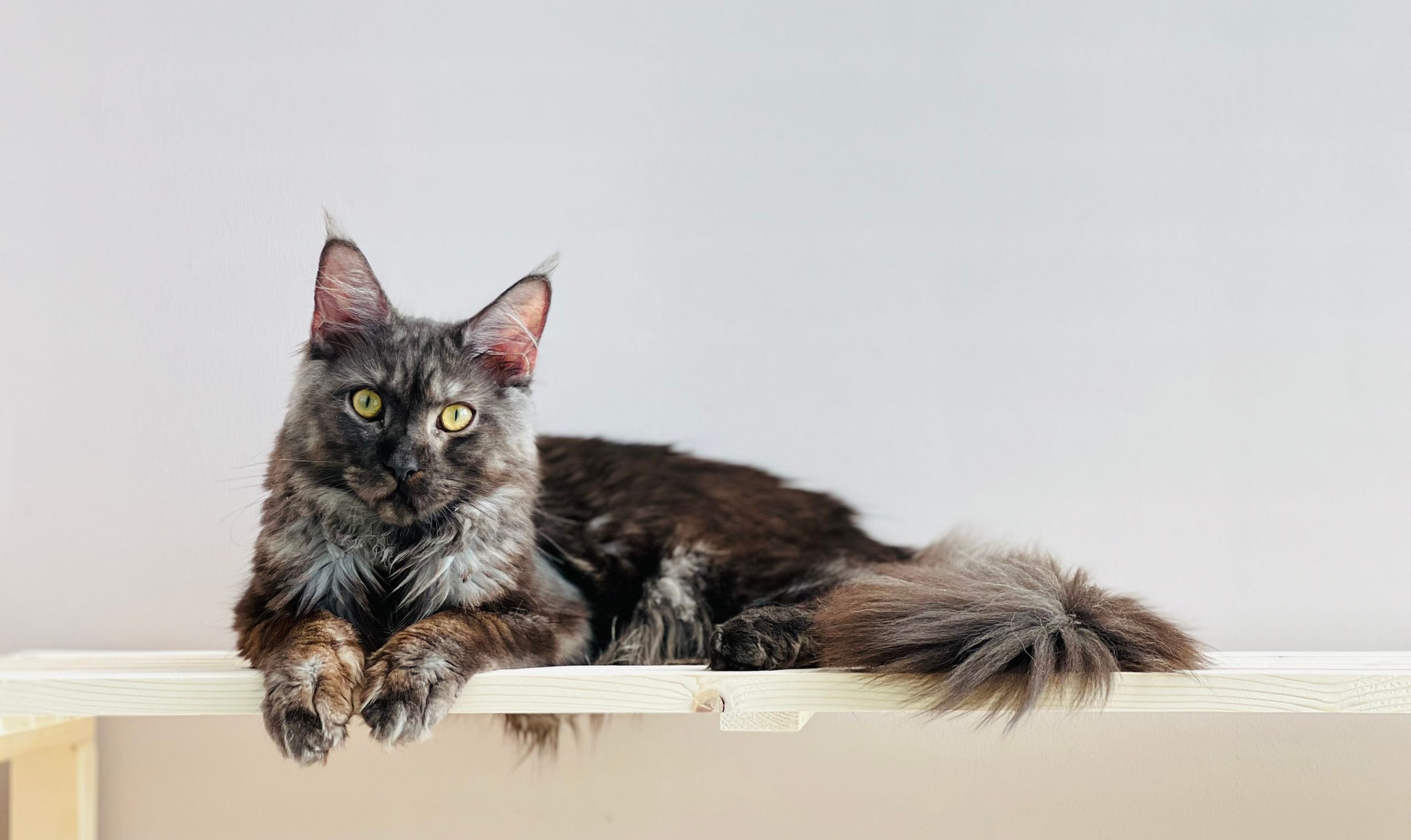
A black tortie Maine Coon usually has deep black fur mixed with red or orange patches around the face, chest, legs, or tail. This is the classic tortie look most cat owners recognize. In long-haired Maine Coons, the thick coat can make the colors appear smoky or uneven from different angles.
You Might Also Like
Black Smoke Maine Coon Cat – Rare Traits, Looks, Facts & More
Red Tortie
A red tortie Maine Coon often shows warmer, orange-heavy coloring with darker black patches blended underneath. Some breeders use “red” and “orange” interchangeably, so color intensity can vary widely between kittens.
Blue Tortie
A blue tortie Maine Coon is a dilute tortie pattern where black softens into bluish-gray and orange fades into cream. These cats often appear pastel or watercolor-like, especially under indoor lighting.
Blue Smoke Tortie
A blue smoke tortie has a pale undercoat beneath darker outer fur, creating a shifting smoky effect when the cat moves. Sunlight and coat movement can make the pattern look very different throughout the day.
You Might Also Like
Blue Smoke Maine Coon Cats – Appearance, Genetics, and Care Guide
Tortie and White
A tortie and white Maine Coon has visible white spotting that breaks up the tortoiseshell pattern. Because of the larger white areas, these cats are sometimes confused with calicos.
Dilute Tortie
A dilute tortie has softened pigment overall, giving the coat a muted gray-and-cream appearance instead of strong black-and-orange contrast. Many kittens start with lighter coloring that deepens as the adult coat develops.
Tortie Tabby Maine Coon (Torbie)
A torbie Maine Coon combines tortie coloring with visible tabby striping on the face, legs, or body. The stripes often appear underneath the color patches, giving the coat a more layered pattern.
How Tortie Patterns Change as Kittens Grow
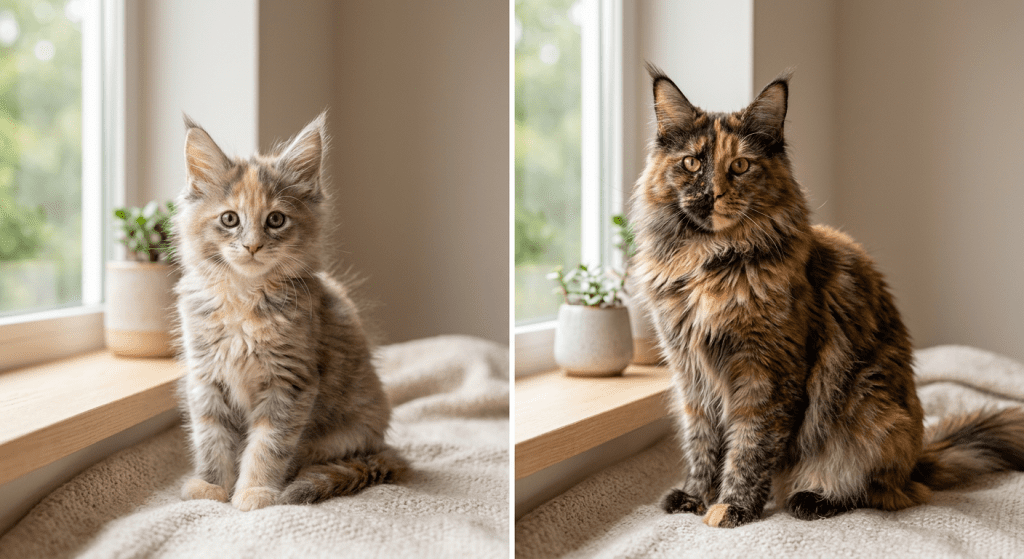
Tortie Maine Coon kittens rarely keep the exact same look as they mature. Coat contrast, striping, smoke effects, and color depth often become more noticeable as the adult coat grows in. For example, a kitten that looks mostly dark at first may later develop brighter orange patches or clearer tabby markings.
When reviewing breeder photos, natural lighting usually gives a more accurate view of the coat than heavily filtered indoor pictures. Photos of older cats from the same bloodline can also help you understand how a kitten’s pattern may develop over time. Once you understand how tortie patterns change, the next question is why most tortie cats are female.
Why Are Tortie Maine Coons Mostly Female?
Most tortie Maine Coons are female because tortoiseshell coloring is linked to the X chromosome. Female cats have two X chromosomes, which allows both black-based and red-based pigment to appear together in the coat. Male cats usually have one X and one Y chromosome, so they typically show only one color family instead of the mixed tortie pattern.
That is why a male tortie Maine Coon is rare, though not impossible. In most cases, male torties happen because of an extra X chromosome or other uncommon genetic conditions that affect coat color inheritance.
Tortie coloring is also often surrounded by personality myths, especially the idea of “tortitude.” While some torties are bold and expressive, coat pattern alone does not guarantee temperament, health, or breed quality. When choosing a kitten, health testing, socialization, and breeder transparency matter far more than color alone.
You Might Also Like
Male vs. Female Maine Coon Cat – Personality, Size & Price Compared
Personality: Is “Tortitude” Real?
“Tortitude” is the playful nickname people use for the supposedly bold, sassy, or dramatic personality often linked to tortie cats. Some tortie Maine Coons truly are outgoing and expressive, but temperament is influenced far more by genetics, early socialization, handling, and environment than by coat pattern alone.
Even kittens from the same litter can develop very different personalities. One tortie may follow people around the house and chirp constantly, while another prefers a calmer, more reserved routine.
That said, Maine Coons are naturally social, intelligent, and playful cats, which may help explain why the “tortitude” stereotype became so popular. When choosing a kitten, it is better to watch real behavior and interaction style rather than rely too heavily on coat-color myths.
Tortie Maine Coon Kitten Guide
Tortie Maine Coon kittens often look softer or less defined when they are young, but the coat usually becomes richer and more detailed as the adult fur develops. Before reserving a kitten, look for bright eyes, clean ears, steady movement, a healthy appetite, and relaxed social behavior around people.
Ask breeders or shelters questions such as:
- Is the kitten fully vaccinated and health-checked?
- Have the parents been tested for common Maine Coon health conditions?
- How is the kitten handled and socialized each day?
- How might the coat pattern change as the kitten matures?
- Can you see recent photos or videos in natural lighting?
Be cautious of sellers who focus heavily on “rare tortie color” while avoiding questions about health, welfare, or veterinary care.
Price and What Affects It
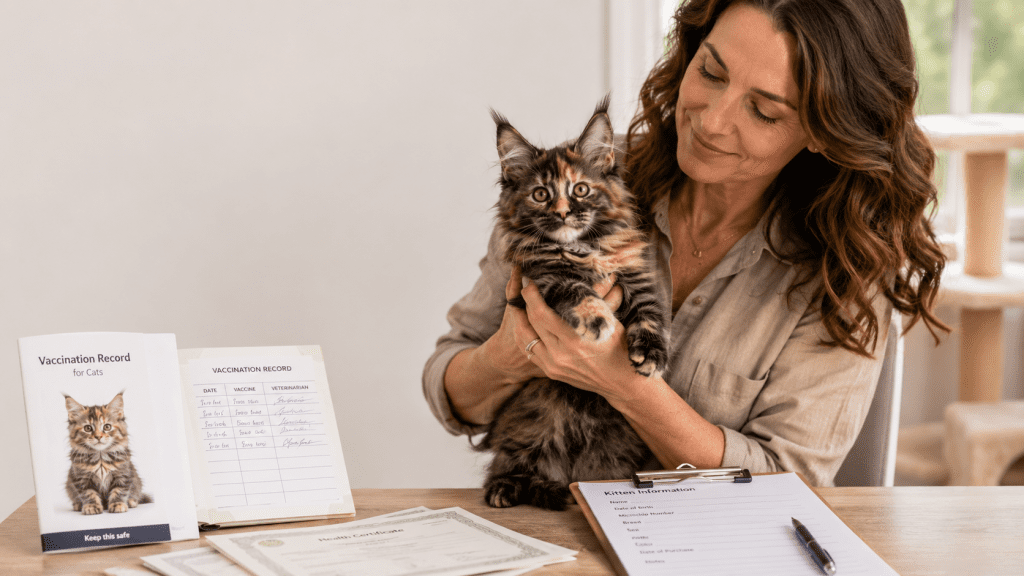
The price of a tortie Maine Coon depends on more than coat color alone. In many regions, kittens from responsible breeders often range from around $1,000 to $3,000+, depending on pedigree, health screening, breeder reputation, location, and early socialization. Rare-looking tortie patterns may increase demand, but long-term health and temperament matter far more than color alone.
Before reserving a kitten, ask questions such as:
- What is included in the price?
- Are vaccines, registration papers, vet checks, or a health guarantee provided?
- Have the parents been tested for common Maine Coon health conditions?
- Can the breeder explain the kitten’s background and socialization routine?
Very low-priced tortie Maine Coon listings can sometimes be a warning sign, especially when health records or documentation are missing. Adoption can also be a great option for families who care more about personality and companionship than pedigree alone.
Care, Grooming, and Coat Maintenance
A tortie Maine Coon needs the same regular grooming care as any other Maine Coon. Their long, thick fur is prone to hidden tangles, especially around the underarms, belly, chest ruff, and tail base. While the tortie pattern itself does not require special treatment, a clean and healthy coat often makes the colors look richer and more defined.
For easier Maine Coon coat maintenance:
- Brush several times each week using a wide-tooth comb or slicker brush
- Check high-friction areas regularly for small tangles or mats
- Increase grooming during heavy seasonal shedding
- Support coat health with balanced nutrition and fresh water
- Keep grooming sessions calm, short, and reward-based
Many owners miss small mats until they tighten under the fur. Consistent grooming helps protect both comfort and coat quality, not just appearance.
Health Considerations
A tortie Maine Coon’s coat may attract attention, but the most important health concerns are the same breed-related conditions seen in other Maine Coons, including HCM (hypertrophic cardiomyopathy), hip dysplasia, and certain inherited disorders. Coat color itself does not make a cat healthier or higher quality.
Watch for signs such as:
- dull, patchy, or heavily shedding fur
- reduced grooming, appetite, or activity
- itching, bald spots, or irritated skin
- sudden behavior or energy-level changes
Small changes in grooming habits or appetite are sometimes the first signs that something feels wrong. A kitten with proper health screening, veterinary records, and responsible breeder support is usually a safer choice than one advertised mainly for its rare-looking coat pattern.
Recommended Post
Tortie vs. Torbie vs. Calico Maine Coon Patterns
Tortie, torbie, and calico Maine Coons are often confused in breeder photos, especially when the coat is long or heavily blended. The easiest way to tell them apart is by looking at the coat pattern itself:
- Tortie: mixed black-and-red or orange patches with little or no white
- Torbie: tortie coloring combined with visible tabby striping
- Calico: larger separated color patches with more noticeable white areas
- Smoke: a pale undercoat beneath darker outer fur that changes in light or motion
- Solid colors: more even coloring without patchy mixing or striping
A long-haired Maine Coon coat can make patterns appear softer or harder to identify, so a single photo is not always reliable. Natural-light images and close-up photos usually give a more accurate view of the pattern. These are coat variations, not different breeds, and understanding the differences makes breeder descriptions much easier to decode.
Conclusion
Tortie Maine Coons are more than just eye-catching cats with unusual coat patterns. Before choosing a kitten, it helps to keep these priorities in mind:
- Health testing and screening
- Temperament and early socialization
- A responsible breeder or adoption source
- Coat color and rarity last
A striking coat may attract attention at first, but long-term compatibility matters far more. Whether you prefer tortie, torbie, calico, or smoke patterns, the best Maine Coon is usually the one that fits comfortably into your home, routine, and lifestyle.
References
Tortie Maine Coon’s Awesome Mustache Is Too Cool for …
Tortie Maine Coon Colors, Genetics, Personality, Price and …
Tortoiseshell Color Maine Coon Cat
Anyone else have a Maine Coon tortie?
Tortie vs. Torbie Maine Coon Cats
Tortie Maine Coon Cat: Info, Pictures, Facts & History
Maine Coon Kitten’s Tortie Coloring Is Giving Full Gothic …