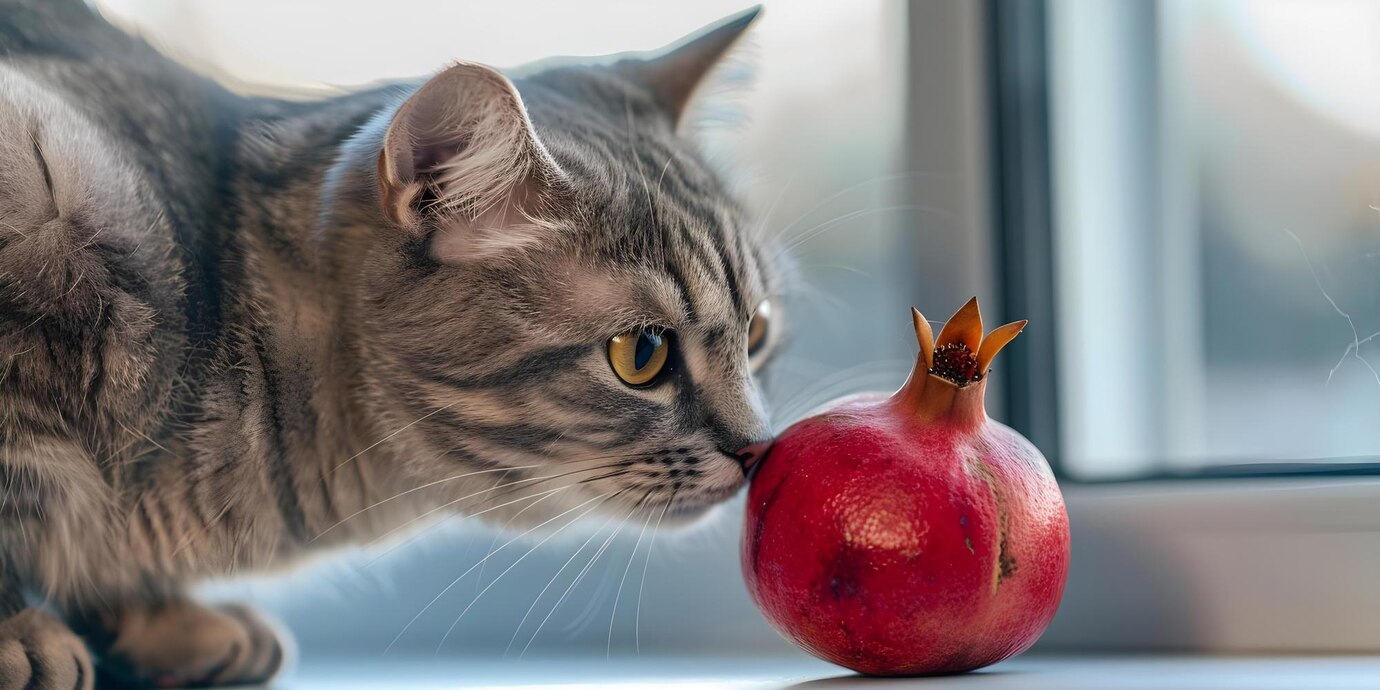
Many cat owners ask, “Can cats eat pomegranate?” after a curious paw lands in a fruit bowl or a cat licks spilled juice on the counter. Pomegranate isn’t highly toxic, but it’s not recommended for cats and doesn’t offer any real nutritional benefit.
Cats are obligate carnivores, so fruit sugars, acids, and plant fiber don’t fit into their natural diet. A small accidental taste is usually low risk, but larger amounts can upset a sensitive stomach—especially seeds, rind, or concentrated juice.
What different exposures mean:
- A lick of juice: usually just monitor for mild stomach upset
- A few seeds (arils): often pass without issue, but not a good treat
- Large amounts: higher chance of vomiting or diarrhea
- Leaves or rind: more irritation risk—contact a vet if concerned
Pomegranate and cats are mostly a curiosity situation rather than a feeding choice. A tiny accidental taste usually isn’t a crisis, but it’s still best to keep this fruit out of your cat’s diet and stick to species-appropriate treats instead.
Are Pomegranates Toxic to Cats?
Many worried owners search “are pomegranates toxic to cats?” after seeing their cat lick a seed or sip spilled juice. Pomegranate isn’t considered a major poison for cats, but “not toxic” doesn’t mean it’s a safe food.
The main issue is digestive irritation. Compounds in the fruit—like tannins and natural acids—can upset a cat’s stomach, especially if more than a small amount is eaten.
What usually happens depends on the exposure:
- A lick of juice or one seed: usually low concern
- Several seeds or juice: possible vomiting or diarrhea
- Rind, leaves, or flavored products: more caution needed
If your cat ate some:
- Remove the fruit
- Watch for symptoms like vomiting, diarrhea, or unusual drooling
- Contact a vet if symptoms appear or if a larger amount was eaten
In most cases, this is a stomach-upset situation rather than a poisoning emergency—but it’s still something to take seriously if symptoms show up.
You Might Also Like
Can Cats Eat Pomegranate Seeds?
It’s common for a cat to bat a seed off the counter or pick one up from the floor—so can they actually eat pomegranate seeds? The short answer: they’re not suitable for cats.
Each juicy red piece (called an aril) contains a small, firm seed inside. While swallowing one or two is unlikely to cause harm, the fiber and acidity can irritate a cat’s stomach, and the hard seed can be tricky—especially for kittens.
If your cat ate a few seeds:
- 1–2 seeds: usually low concern, but still monitor
- Several seeds may lead to stomach upset
- Kittens: higher choking risk—watch more closely
What to do now:
- Remove any remaining fruit
- Offer fresh water and regular food
- Keep an eye on your cat’s behavior
Pomegranate seeds are more of a digestive concern than a poisoning issue—but they’re still best avoided in favor of safer, cat-appropriate treats.
Can Cats Drink Pomegranate Juice?
Pomegranate juice might seem harmless, but it isn’t a good choice for cats. It’s more concentrated than fresh fruit, meaning higher acidity and sugar levels that can irritate a cat’s stomach and mouth. Since cats are obligate carnivores, fruit drinks don’t offer any real benefit to their diet.
If your cat licked a little juice from a spill or glass, it’s usually not an emergency—but it’s still something to keep an eye on.
What to do if your cat licked pomegranate juice:
- Remove the drink and clean up any sticky spills
- Offer fresh water instead
- Observe your cat for any changes
- Contact a vet if a larger amount was consumed
Pomegranate juice isn’t something cats need, so it’s best to keep it out of reach and stick with fresh water.
Can Cats Eat Pomegranate Leaves or Peel?
Pomegranate leaves and peel aren’t safe for cats to eat. If your cat chews on a leaf or rind (the outer peel), the main concern is plant compounds that can irritate the mouth and stomach. These parts are also more fibrous, bitter, and harder to digest than the soft, juicy arils.
This can happen in everyday situations—like a cat nibbling a fallen garden leaf or licking a peel left on the counter.
If your cat ate pomegranate leaves or peel:
- Remove access right away
- Check how much was eaten
- Watch for signs like drooling, vomiting, or discomfort
Leaves and peel are the parts cats should avoid, so it’s best to keep them out of reach and clean up scraps promptly.
You Might Also Like
Can Kittens Eat Pomegranate?
Kittens should not eat pomegranates. Their small size and developing digestive systems make them more sensitive to stomach upset, and hard seeds can also pose a choking risk. Even though a curious kitten might swipe a seed from your plate or lick juice off your fingers, it’s not an appropriate treat.
If your kitten has already tasted some, stay calm and assess the situation:
- Check the amount: a tiny lick vs. several bites
- Watch for any changes in behavior or appetite
- Return to normal feeding: offer regular kitten food and fresh water
Better treat options: small pieces of plain cooked chicken, fish, or commercial kitten treats in moderation—these support the meat-based nutrition kittens actually need.
Benefits of Pomegranate for Cats
You might wonder if this “superfruit” offers real health perks for cats. Pomegranate does contain antioxidants and polyphenols, but that doesn’t mean cats benefit from eating it. Cats are obligate carnivores, so their key nutrients come from animal-based foods—not fruit.
In reality, any “benefit” is more about how small plant compounds might be used in some pet food products—not from feeding the fruit itself.
- Human nutrition: valued for antioxidants
- Pet food ingredients: sometimes included in small amounts for formulation
- Direct feeding to cats: not necessary or recommended
If your goal is better health for your cat, focus on complete, balanced cat food and species-appropriate treats. Pomegranate may sound healthy, but it doesn’t add anything meaningful to a cat’s diet.
Final Thoughts
Pomegranate isn’t a food cats need—and it’s not worth adding to their diet. If a curious cat swipes a seed or licks a drop of juice, it’s usually a “monitor and move on” situation rather than a reason to panic.
What cat owners should remember:
- Small taste: remove the fruit, offer water, and watch for vomiting, diarrhea, or drooling
- Larger amount: monitor closely and contact your vet if symptoms appear
- Long-term habit: stick with species-appropriate cat food and treats
The key point is simple: “not toxic” doesn’t mean “worth feeding.” When it comes to pomegranates and cats, the safest approach is to keep fruit for people and cat food for cats.

Founder of Cats Question and lead cat care writer, with a background in veterinary education in Bangladesh and a lifelong passion for cats. Dedicated to creating trusted, practical content that helps cat owners make better everyday decisions—guided by real-life experience and inspired by a deep commitment to feline health and wellbeing.