Some listings call them orange, others say red or red tabby, and the same Maine Coon may be described differently depending on who is selling it. That confusion is one reason these cats attract so much attention. Rather than one exact shade, an orange Maine Coon can range from deep copper and ginger tones to softer cream and apricot hues.
Not all orange Maine Coons look alike. Lighting, grooming, age, and coat maturity can all influence how their color appears over time. If you’re comparing breeder listings, considering a rescue cat, or wondering whether an orange Maine Coon kitten is rare, this guide will help you make sense of the color terms, evaluate what you’re seeing, and focus on the factors that matter most for long-term ownership.
Appearance: Beyond the Orange Coat

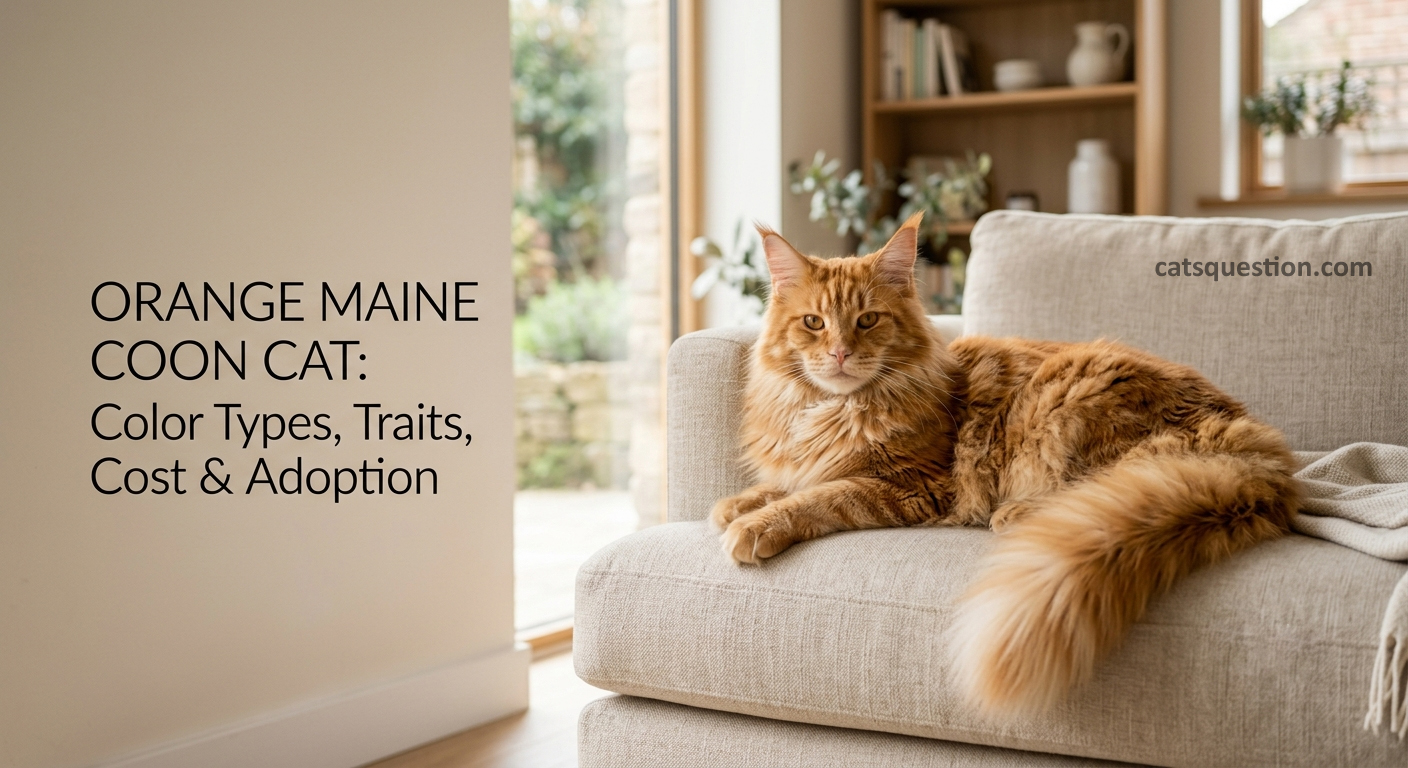
An orange Maine Coon stands out for more than its coat color. Regardless of shade or pattern, the breed is known for its long rectangular body, tufted ears, broad muzzle, large paws, shaggy coat, and sweeping tail that becomes even more impressive with age.
You may see orange Maine Coons with bold tabby stripes, orange-and-white markings, larger white patches, or softer cream-red tones. In bright sunlight, some coats appear deep copper, while others look almost golden or apricot.
Kittens often appear smaller and fluffier than they will as adults. Over the next few years, many develop a fuller mane, heavier frame, and more substantial overall appearance. Males are typically bulkier than females, but coat color does not affect body structure.
When evaluating a breeder or rescue listing, pay attention to features such as ear tufting, body length, paw size, tail thickness, and head shape rather than focusing on color alone.
You Might Also Like
Personality: Living With an Orange Maine Coon
Orange Maine Coons are known for being social, curious, and easy to live with, but coat color does not determine personality. Many enjoy being part of everyday activities, whether that means following family members from room to room, sitting nearby while you work, or quietly keeping an eye on household routines.
Many Maine Coons share traits such as:
- Affectionate: Often prefer staying close to their people rather than spending hours as lap cats.
- Playful: Enjoy interactive games, puzzle toys, and learning routines.
- Family-friendly: Many adapt well to respectful children and active households.
- Pet-social: They often coexist peacefully with other cats and calm dogs when introductions are handled properly.
- Observant: Quick to notice schedules, habits, and changes in their environment.
Some cats are more outgoing than others, regardless of sex or coat color. Early socialization, individual temperament, and the home environment usually have a much greater influence on behavior.
Before choosing an orange Maine Coon, focus on the cat’s confidence, social history, and overall compatibility with your lifestyle—the best companion is the one that truly fits your home.
Behavior, Enrichment, and Daily Life
Living with an Orange Maine Coon often means sharing your home with a cat that likes to be involved. Many follow household routines closely, watch whatever you’re doing, and seem determined to participate in daily activities.
Because of their intelligence and curiosity, boredom can sometimes show up as excessive vocalizing, attention-seeking behavior, furniture scratching, or other unwanted habits.
A healthy Orange Maine Coon daily life usually includes:
- Interactive play: Wand toys, fetch, or chasing games for 15–30 minutes daily.
- Mental challenges: Puzzle feeders, treat hunts, and rotating toys to keep their minds busy.
- Vertical space: Cat trees, shelves, or window perches for climbing and observing their surroundings.
- Positive training: Reward-based scratching habits, handling practice, and even leash training for confident cats.
Many adapt well to apartment living if they have structure, stimulation, and regular human interaction. In practice, a Maine Coon that stays mentally and physically engaged is usually calmer, happier, and easier to live with. Once you understand their personality, the next step is learning how to meet their day-to-day care needs.
Care: Grooming, Feeding, and Exercise

An Orange Maine Coon care routine is less about hard work and more about consistency. Their large size and long coat mean a few simple habits can prevent bigger problems later. A practical Maine Coon care routine includes:
- Balanced nutrition: Feed a complete diet suited to your cat’s age and activity level, and monitor body condition rather than assuming a large cat needs unlimited food.
- Regular grooming: Brush several times a week, paying close attention behind the ears, under the legs, and around the hindquarters where mats often develop. During seasonal shedding, more frequent brushing may be helpful.
- Healthy weight management: Check your cat’s weight regularly and adjust feeding habits when needed. A thick coat can sometimes make extra weight harder to notice.
- Litter box and routine upkeep: Use a spacious litter box, scoop daily, and check nails, ears, and coat condition as part of regular care.
When these small tasks become part of a routine, most Orange Maine Coons stay cleaner, more comfortable, and easier to manage throughout every life stage.
You Might Also Like
Health, Lifespan, and Vet Care
Good health starts long before an Orange Maine Coon comes home. Genetics, health screening, nutrition, and preventive care all play a role in long-term well-being. While many Maine Coons live around 10–15 years or longer, individual lifespans vary. Before adopting or purchasing a cat, ask about HCM screening, hip evaluations, vaccination records, parasite prevention, and family history. These checks can help reduce avoidable surprises later on.
After adoption, schedule a baseline veterinary exam, even if your cat appears healthy. Maine Coons, like many cats, can hide illness well, so pay attention to changes such as:
- Reduced appetite or energy
- Vomiting, diarrhea, or unexplained weight changes
- Poor coat condition, reduced grooming, or social withdrawal
Annual wellness visits are a good minimum for healthy adults, while seniors often benefit from checkups every six months. In many cases, owners notice subtle shifts in behavior before obvious signs of illness, making routine observation just as important as routine veterinary care.
You Might Also Like
How Much Does an Orange Maine Coon Cost?
The cost of an Orange Maine Coon depends on more than color alone. Factors such as breeder reputation, lineage, health testing, location, and registration status can all influence the price.
A pet-quality kitten from a reputable breeder typically costs $1,500–$3,500+, while show-quality cats may exceed $4,000–$6,000. Adoption is often the more affordable route, with many rescues charging $200–$500, frequently including spay/neuter surgery, vaccinations, and microchipping.
The first year is usually the most expensive, as startup costs can add up quickly. Supplies, veterinary visits, grooming tools, carriers, and sturdy cat furniture are expenses many new owners underestimate. After that, ongoing costs often range from $95–$150 per month for food, litter, preventive care, and enrichment.
Before paying a deposit, ask for health records, screening information, and a written contract. Looking beyond the purchase price can help you budget more realistically for the long-term care and well-being of your cat.
How to Adopt an Orange Maine Coon Safely
Finding the right Orange Maine Coon starts with asking the right questions. Begin with Maine Coon rescues, local shelters, or reputable breeders if a registered purebred is your goal.
Before committing, ask about the cat’s health history, vaccination records, temperament, and whether it has been around children, other cats, or dogs. Be cautious of unusually low prices, requests for immediate deposits, or sellers who cannot provide documentation or answer basic questions about the cat.
Keep in mind that not every Maine Coon-looking cat is purebred, and many Maine Coon mixes in rescues make wonderful companions. Once your cat comes home, a settling-in period is normal. Some cats may hide, eat less, or act unusually quiet for the first few days as they adjust to a new environment.
In the end, finding a cat that fits your household and lifestyle is usually more important than any label on a listing.
Conclusion
An orange Maine Coon cat may catch your eye because of its color, but living with one is about much more than appearance. Before bringing one home, consider:
- Temperament and household compatibility
- Grooming and shedding requirements
- Breeder or rescue reliability
- Upfront and ongoing costs
- Time and commitment for daily care
Some families find that a purebred kitten is the right fit, while others discover that a rescued Maine Coon mix suits their lifestyle just as well. What matters most is not whether a cat has the rarest color or the most impressive pedigree, but whether its needs, personality, and energy level fit comfortably into your daily life. The right Maine Coon is the one that feels at home in your routine—and allows you to become part of theirs.
References
Orange Maine Coon Cat Breed: Info, Pictures, …
Comprehensive Guide to Orange Maine Coon Cats
Orange Maine Coon Cats are the Only Cat You’ …
Orange Maine Coon Kitten’s Precious ‘Wispy’ Ears …
Orange Maine Coon Cat Color (a.k.a. Red Tabbies!)
Now I understand when people talk about Orange …
The Final Boss of Oranges : r/OneOrangeBraincell